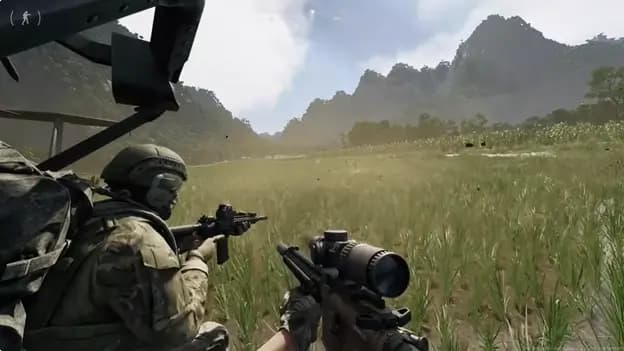
Why Patience Is the Most Underrated Skill in Gray Zone Warfare
8/11/2026
Most players die in Gray Zone Warfare because they're in a hurry. Not because their aim is bad or their loadout is wrong. They peek too fast, push too early, or heal in the open when waiting ten seconds would have saved the run.
That's not an accident. MADFINGER built the game around deliberation, and every major patch since Spearhead has leaned harder into that philosophy. If you're still playing Gray Zone Warfare like a twitch shooter, you're fighting the game's design instead of using it.
The Game Was Built to Punish Rushing
MADFINGER still frames Gray Zone Warfare as a PvE-first open-world tactical shooter, and that positioning matters more than it sounds. Unlike arena shooters where fights last three seconds, this game stretches out engagements across hundreds of meters of terrain, buildings, and unknown AI patrols.
Patch 0.4.5.0 made this even more explicit. Conflict Zones expanded to 400 meters and got re-centered around the defending PMC, while a new 30-minute Combat Outpost recapture cooldown was added. MADFINGER's own patch notes describe the goal plainly: make engagements "more organic, less predictable, and more rewarding." Translation? Slow down. Fast re-entries and reflexive pushes get punished by design, not by bad luck.
Also worth remembering: MADFINGER has openly said the roadmap is outdated and that the game currently sits at roughly 20% complete. Systems are still shifting. Players who adapt patiently to each update tend to survive the transition better than those chasing last patch's meta.
Ballistics, Sound, and AI All Reward Waiting
Three separate systems in the game quietly nudge you toward caution.
Ballistics Rework
The 0.4 ballistics changes simplified on-body damage calculations and added clearer ammo displays showing exactly which armor levels a round can penetrate. That's useful information, but only if you actually stop and check it before engaging. Players who fire blind at unknown armor tiers waste ammo and give away position for nothing.
Audio Cues
Spearhead's audio rework added directional sound, injury audio, and clearer distance cues. This is arguably the single biggest patience reward in the whole game. If you're sprinting with your own footsteps drowning everything out, you're blind to information the game is actively handing you for free.
AI Behavior
AI reactions now scale with distance, suppression, and weapon type. Rush a compound and you'll trigger a chaotic, hard-to-read firefight against multiple defenders at once. Clear it slowly and you get time to read patrol patterns, isolate targets, and pick your moments.
None of these systems reward reflexes on their own. They reward players who gather information first and shoot second.
Healing Is a Patience Test in Disguise
Gray Zone Warfare's medical system isn't just a health bar. Spearhead introduced clearer injury severity indicators and more detailed treatment feedback, and the logic behind it is triage-based: stop bleeding first, deal with fractures or pain later when it's actually safe.
Here's where impatience gets people killed. Trying to complete a full heal cycle while still exposed is one of the most common beginner mistakes in the game. The correct play is almost always to create distance, break line of sight, then heal. A half-treated wound in cover beats a fully-treated character caught mid-animation in the open.
Extraction Discipline Matters as Much as Combat Skill
The new respawn logic and outpost cooldowns from 0.4.5.0 changed the after-action phase significantly. You can't just win a fight and immediately reset the situation anymore. That 30-minute cooldown window means overcommitting after an engagement is riskier than it used to be.
Secure loot before pushing further into contested territory
Clear likely extraction routes before you actually need them
Players who treat extraction as a passive afterthought instead of an active planning phase tend to lose gear they'd already earned, which is the most avoidable way to end a session.
The "Gray Zone" Name Isn't Just Branding
In defense and security literature, gray-zone conflict describes competition that stays below the threshold of open war, relying on ambiguity, incremental pressure, and what the Washington Institute specifically calls "indirection, ambiguity, strategic patience." The doctrine is built around protracting conflict rather than escalating it into a decisive battle. That's a genuinely useful lens for the game itself. Compare it to Escape from Tarkov, where MADFINGER's title leans harder into structured PvEvP and open-world pacing rather than Tarkov's tighter, harsher raid pressure. Both games punish carelessness, but Gray Zone Warfare's systems specifically reward long-form map awareness and information-gathering over quick-reaction raid sprints.
Common Impatience Mistakes Worth Avoiding
A few patterns show up constantly in community discussion around beginner deaths:
Peeking corners at full speed instead of slow-leaning for information
Ignoring audio cues while moving loudly through contested buildings
Slow, right-hand peeks and lean-based corner clearing aren't officially documented mechanics, but they're widely used community techniques that reduce exposure and avoid 50/50 gunfights where neither side has an information advantage.
Where Information-Gathering Fits Into All This
MADFINGER's official site directs players toward a community-powered tactical map to plan routes around Lamang, which tells you something important: intel-gathering isn't an advanced-player trick, it's baseline expected play. Route planning, chokepoint awareness, and timing your movement against known threats all come before the actual shooting. Some players extend this further by using external tools to gather even more battlefield information before engaging. Gray Zone Warfare ESP and aimbot from Battlelog gives players visibility on enemy positions, distance, and health through obstacles, plus radar tracking to anticipate enemy movement before a fight even starts. Combined with a patient playstyle, that kind of information advantage lets you choose engagements instead of stumbling into them.
Patience Is a Skill You Can Actually Train
There's no shortcut version of this. The players who consistently survive contact in Gray Zone Warfare aren't reacting faster than everyone else. They're making fewer high-variance decisions because they waited for sound cues, checked ammo penetration values, cleared rooms methodically, and treated extraction as seriously as combat. Every system MADFINGER has shipped through the 0.4 cycle points the same direction: slow down, gather information, then act. The game's own doctrine namesake is built on strategic patience rather than decisive rushes. Playing it any other way just means fighting the design instead of using it.